12% explored

Meditations
STOICISM12 min read

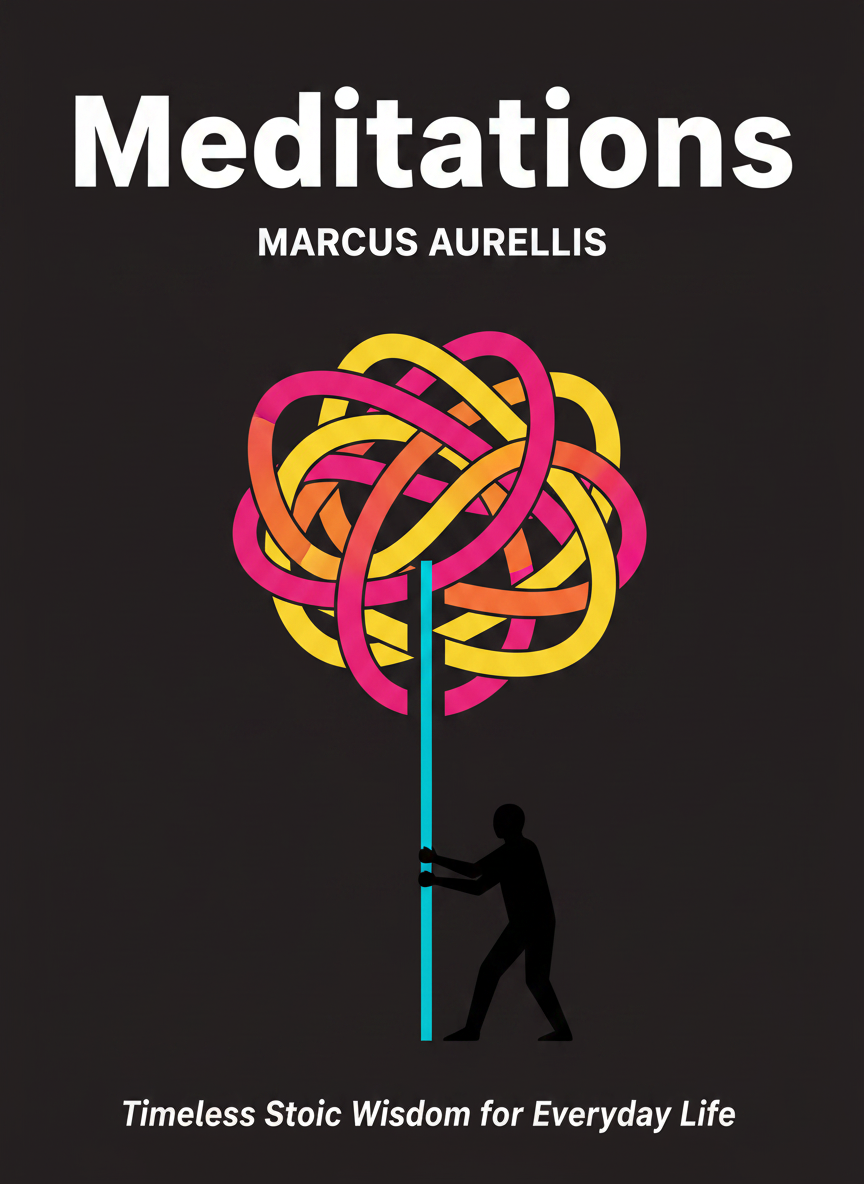
Meditations

by Marcus Aurelius

Meditations is not a book in the traditional sense, but the private journal of Marcus Aurelius, the man who ruled the Roman Empire at the height of its power. Written nearly two thousand years ago, these personal notes were his way of practicing the principles of Stoic philosophy. They offer a timeless and practical guide to finding tranquility, resilience, and purpose in the…

A Summary of Meditations by Marcus Aurelius: Key Stoic Lessons

Dive into the timeless wisdom of 'Meditations' by the Roman Emperor Marcus Aurelius, a foundational text of Stoic philosophy. This isn't just a book; it's a personal journal of reflections on virtue, resilience, and inner peace. In this Meditations Marcus Aurelius summary, we explore the core principles that have guided leaders and thinkers for centuries. Discover how to apply ancient Stoic wisdom to modern challenges, learning to control your perceptions, accept what you cannot change, and live a life of purpose and tranquility. From managing emotions to facing mortality, the key lessons from Meditations offer a practical roadmap to building an unconquerable mind and finding serenity in the chaos of daily life.

Frequently Asked Questions

What is the main message of Meditations?
The core message is to cultivate inner peace by focusing on what you control—your thoughts, judgments, and actions—while accepting what you cannot. It is a practical guide to living a virtuous and tranquil life through reason and self-discipline, regardless of external circumstances.
How can I apply Stoicism to my daily life?
Practice mindfulness of your reactions to differentiate between what is in your control and what is not. Focus your energy on your own choices and actions. Remind yourself of the impermanence of things to appreciate the present and reduce anxiety about future outcomes.
What does Marcus Aurelius say about perception?
Marcus Aurelius teaches that our perception shapes our reality. Events themselves don't disturb us, but our judgments about them do. By choosing to see events objectively and managing our interpretations, we can eliminate much of our self-inflicted suffering and maintain inner calm.
What is the Stoic view on death?
Stoics view death as a natural and inevitable part of life, not something to be feared. The practice of "memento mori" (remembering you will die) is used to create perspective and urgency, encouraging us to live a virtuous and meaningful life in the present moment.
What does it mean to willingly accept what you cannot change?
This Stoic principle, often called "amor fati," means embracing all events as necessary. Instead of resisting reality, you should accept it gracefully. This allows you to turn obstacles into opportunities for growth and to demonstrate strength of character in any situation.
How do you build a resilient mind according to Meditations?
A resilient mind is an unconquerable fortress. You can build it by practicing self-reflection, managing your perceptions, and choosing virtuous responses. This inner citadel cannot be breached by external chaos or negativity, ensuring your tranquility remains intact regardless of your circumstances.

Key Insights

01

Meditations

Meditations is not a book in the traditional sense, but the private journal of Marcus Aurelius, the man who ruled the Roman Empire at the height of its power. Written nearly two thousand years ago, these personal notes were his way of practicing the principles of Stoic philosophy. They offer a timeless and practical…

Practical takeaway

How to separate what is within your control from what is not.

02

Focus only on what you can control

The foundational principle of Stoicism, and the most important lesson from Marcus Aurelius, is understanding the difference between what you can and cannot control. Think about your life: you have complete control over your own thoughts, your judgments, and your actions. This is your inner world, your true domain.…

Practical takeaway

Spend 10 minutes applying this idea in your work today.

03

Your perception is your reality

Imagine your house burns down. Your immediate thought might be, “This is a terrible tragedy!” But Marcus would challenge you to look closer. The event itself is simply that a house burned down. The label “terrible tragedy” is a judgment, an interpretation that you’ve added. It’s this added judgment, not the event,…

Practical takeaway

Spend 10 minutes applying this idea in your work today.

04

You were born to work with others

When you wake up in the morning, it’s easy to want to stay under the covers where it’s warm and comfortable. But Marcus would tell you to get up and do your job as a human being. And what is that job? To cooperate with others for the common good. He frequently reminds himself that humans are social animals by nature,…

Practical takeaway

Spend 10 minutes applying this idea in your work today.

05

Willingly accept what you cannot change

Life is full of events that are completely beyond your control: illness, loss, betrayal, and eventually, your own death. You can't stop these things from happening, but you do have control over how you respond to them. This is the discipline of will, which Marcus describes as the art of acceptance. For the Stoics, the…

Practical takeaway

Spend 10 minutes applying this idea in your work today.

06

Remember that you will die

“You could leave life right now. Let that determine what you do and say and think.” This stark reminder from Marcus is the core of the Stoic practice of memento mori —remembering your mortality. Far from being morbid, this practice is a powerful tool for living a better life. Contemplating the shortness of life gives…

Practical takeaway

Spend 10 minutes applying this idea in your work today.

07

Your mind is an unconquerable fortress

People often dream of getting away from it all—escaping to the countryside, the mountains, or the beach to find peace. But Marcus points out that this is foolish. True peace isn't found in a change of location, but in a change of mind. As he wrote, “Nowhere you can go is more peaceful, more free of interruptions, than…

Practical takeaway

Spend 10 minutes applying this idea in your work today.

08

Everything is temporary, so what should you value?

Take a moment to look at the world around you. Everything you see is in a state of constant flux. As Marcus, borrowing from the philosopher Heraclitus, observed, “Time is a river, a violent current of events, glimpsed once and already carried past us, and another follows and is gone.” Empires rise and fall,…

Practical takeaway

Spend 10 minutes applying this idea in your work today.

09

A practical blueprint for a resilient life

Meditations has endured for nearly two millennia for one simple reason: it works. It’s not a book of abstract theories but a hands-on, practical guide for navigating the challenges of being human. Marcus Aurelius wasn't just thinking about philosophy; he was actively using it as a tool to become a better, stronger,…

Practical takeaway

Spend 10 minutes applying this idea in your work today.

Apply This Today

Three actionable steps to turn these insights into habits immediately.

Summary Recap: In 30 Seconds

  • Meditations: Meditations is not a book in the traditional sense, but the private journal of Marcus Aurelius, the man who ruled the Roman Empire at the…

  • Focus only on what you can c…: The foundational principle of Stoicism, and the most important lesson from Marcus Aurelius, is understanding the difference between what…

  • Your perception is your real…: Imagine your house burns down. Your immediate thought might be, “This is a terrible tragedy!” But Marcus would challenge you to look…