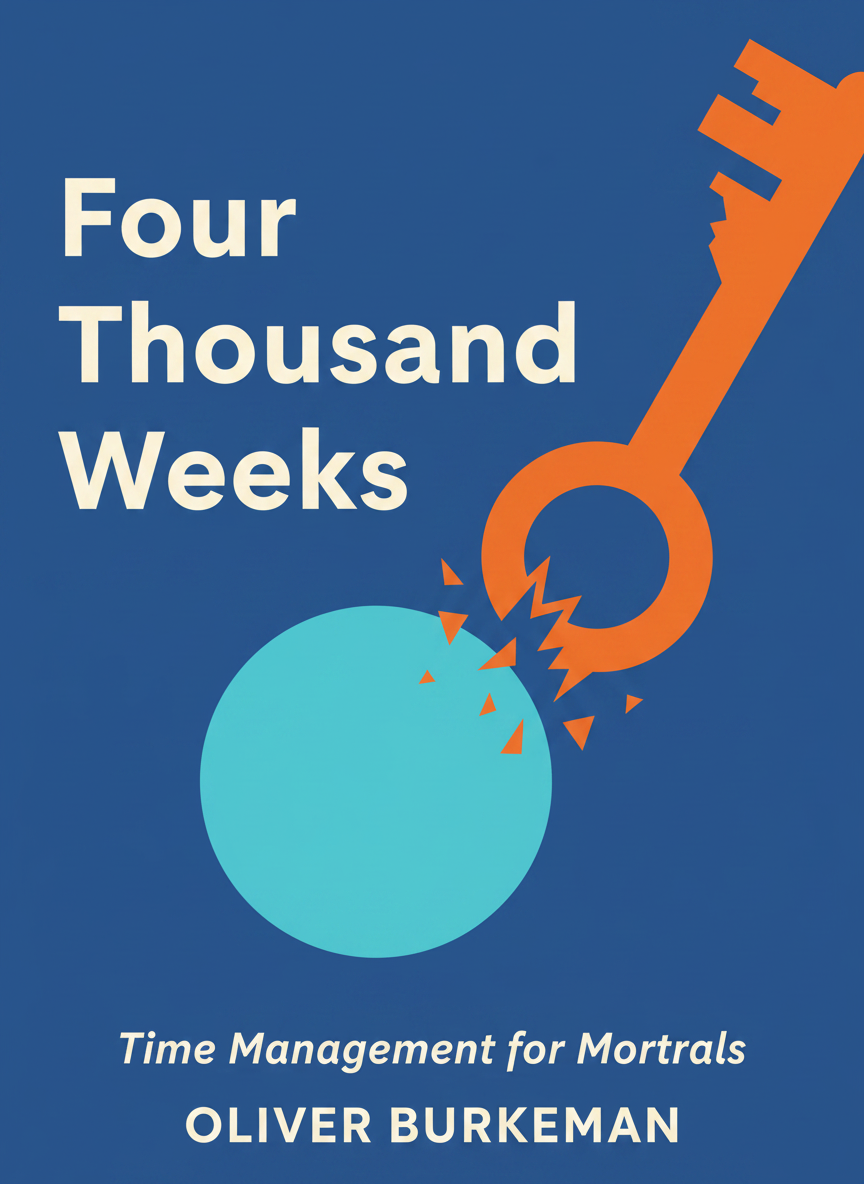
01Time Management for Mortals
Short Brief: The average person lives for about four thousand weeks. This book argues that the secret to a meaningful and productive life isn't to “hack” or master this absurdly short time, but to joyfully embrace its limitations. What's inside: Four Thousand Weeks dismantles our modern obsession with productivity. It…
Practical takeaway
Why becoming more efficient often makes you feel even busier.
The efficiency trap makes you busier, not freer
Have you ever felt that the more you get done, the more you have to do? This is the “efficiency trap.” Our culture tells you that with the right systems, you can get on top of everything. But this promise is a lie. When you become hyper-efficient at answering emails, you just get more emails in return. When you…
Practical takeaway
Spend 10 minutes applying this idea in your work today.
You don't have time, you are time
We tend to talk about time as a resource we possess, like money in a bank account. We think we can spend it, save it, or waste it. This mindset is the source of much of our anxiety. We feel constant pressure to “use it well” and berate ourselves when we believe we have failed. The philosopher Martin Heidegger offered…
Practical takeaway
Spend 10 minutes applying this idea in your work today.
Become a better procrastinator by choosing what to neglect
Since you can't possibly do everything, procrastination is inevitable. At any given moment, you are neglecting almost everything you could be doing. The secret to a well-lived life, then, is to get better at procrastinating—by choosing to neglect the right things. Most time management systems are based on the lie that…
Practical takeaway
Spend 10 minutes applying this idea in your work today.
Distraction is an escape from the discomfort of limitation
We often blame our distractions on external forces, like the “attention economy” designed by Silicon Valley to keep us hooked. While these forces are real and powerful, they aren't the whole story. More often than not, you are a willing collaborator in your own distraction. You actively seek it out as a relief from a…
Practical takeaway
Spend 10 minutes applying this idea in your work today.
Stop living in the 'when-I-finally' future
Many of us live with a “when-I-finally” mindset. “When I finally get my workload under control, find the right partner, or sort out my issues, then I can relax and my real life can begin.” This way of thinking treats your present moments as nothing more than a means to an end. You see your current life as a mere…
Practical takeaway
Spend 10 minutes applying this idea in your work today.
Embrace the joy of settling
In our culture, “settling” is a crime. We're told never to settle for a partner, a job, or a home that's less than ideal. This creates a constant fear of missing out (FOMO) and a paralysis of choice. We resist making big commitments because we want to keep our options open, hoping to avoid the loss that comes with…
Practical takeaway
Spend 10 minutes applying this idea in your work today.
Rediscover the value of 'useless' rest
In our productivity-obsessed culture, even leisure has become a tool for self-improvement. We're told to rest so we can be more productive at work. We take up hobbies not for pure enjoyment, but to achieve a goal, like running a marathon or reaching a state of permanent calm through meditation. Rest that has no…
Practical takeaway
Spend 10 minutes applying this idea in your work today.
Find freedom in your cosmic insignificance
When you ponder the question of “what matters most,” it's easy to fall into a state of “paralyzing grandiosity.” You feel a duty to do something truly world-changing with your four thousand weeks—start a space company, solve global warming, write the next great novel. If you can't, you might conclude your life is…
Practical takeaway
Spend 10 minutes applying this idea in your work today.
What will you do with your four thousand weeks?
The modern struggle with time is a struggle you are doomed to lose. We try to master our schedules, optimize our days, and conquer our to-do lists, all in a futile attempt to gain a feeling of total control over our lives. This quest for mastery is based on a denial of the most fundamental truth of our existence: our…
Practical takeaway
Spend 10 minutes applying this idea in your work today.